Your Cart
×
No. The Big Bus Paris Night Tour is a panoramic, non-stop sightseeing tour. Unlike the daytime Red Route, passengers do not hop off at individual attractions during the night journey.
Paris is called the City of Light for a reason. After sunset, the French capital takes on a completely different personality. The grand boulevards glow beneath...
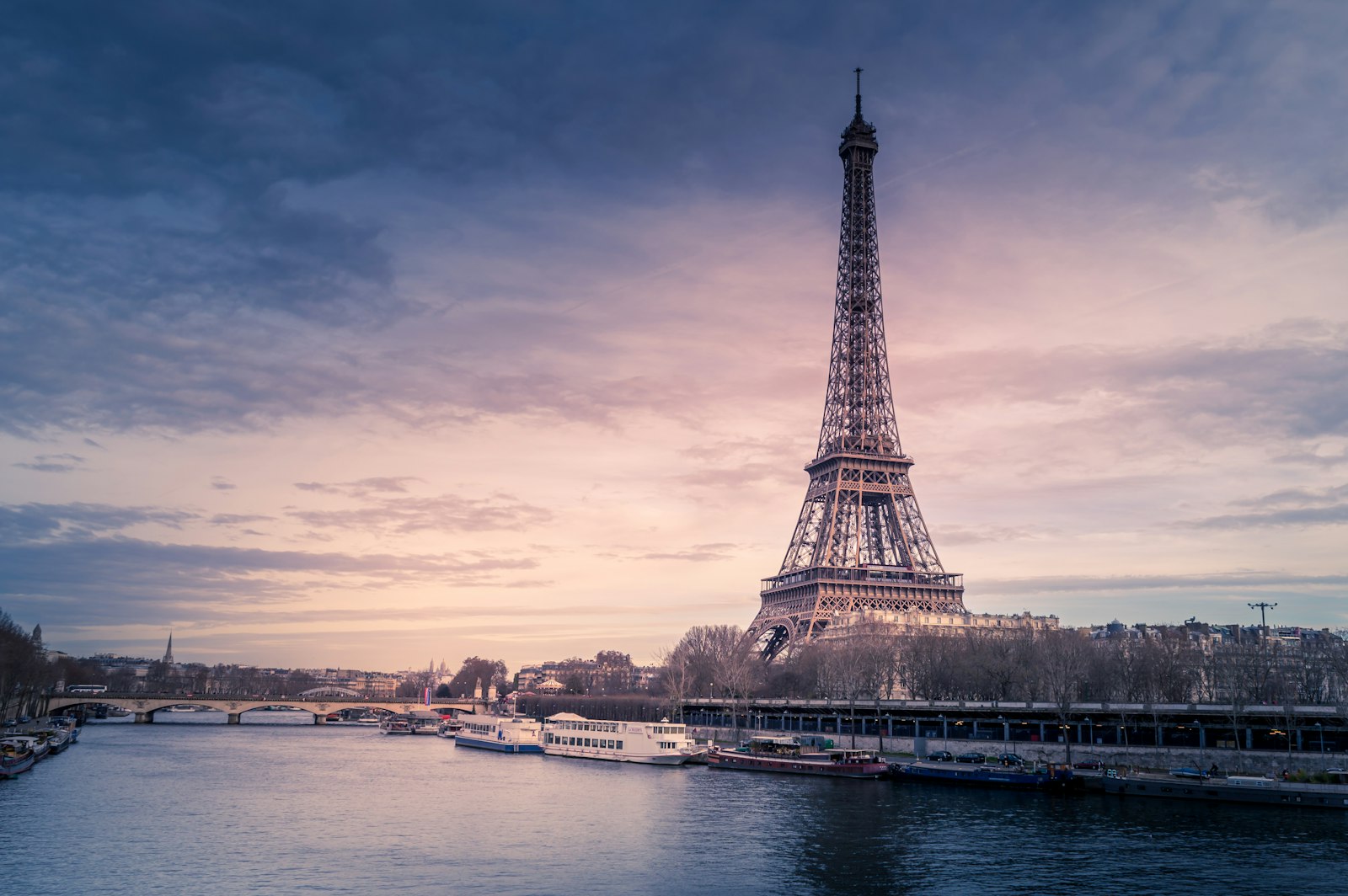
Paris is called the City of Light for a reason.
After sunset, the French capital takes on a completely different personality.
The grand boulevards glow beneath rows of streetlights, historic façades become more dramatic, the Seine reflects the city's illumination, and landmarks such as the Eiffel Tower and Arc de Triomphe stand out against the night sky.
One way to experience this transformation is from the top deck of the Big Bus Paris Panoramic Night Tour.
Unlike the daytime hop-on, hop-off service, the night tour is designed as a continuous panoramic journey. You stay on the bus while it travels through central Paris, passing some of the city's most recognisable landmarks after dark.
But what does Paris actually look like from the bus at night? Which sights stand out the most? How long does the tour take? And what should you know before going?
Here's a practical look at the experience ↓
Before getting into the individual sights, here are the key things to know about the Big Bus Panoramic Night Tour:
• Duration: Approximately 2 hours
• Type: Panoramic, non-stop sightseeing tour
• Hop-on, hop-off: No
• Departure point: Big Bus Information Centre, 11 Avenue de l'Opéra
• Viewpoint: Open-top double-decker bus
• Major sights: Eiffel Tower, Notre-Dame, Montmartre and other central Paris landmarks
• Commentary: Pre-recorded commentary available in multiple languages
• Seating: First-come, first-served
• Best for: Seeing a broad overview of illuminated Paris without walking between multiple attractions
Big Bus currently lists a 9:30 p.m. departure through September 27, 2026, changing to 8:30 p.m. from September 28, 2026. Timings can change, so checking the latest service information before travelling is advisable.
The most interesting thing about Paris at night is that it isn't simply the same city with lights switched on. Darkness changes what you notice.
During the day, there is a lot competing for your attention:
• Pedestrians
• Traffic
• Shopfronts
• Architecture
• Street signs
• Tour groups
• Museum entrances
• Parks and public spaces
At night, much of that visual noise disappears. Instead, illuminated monuments and buildings become the focus.
A street that looked ordinary during the afternoon can suddenly feel cinematic. A bridge becomes a line of lights across the Seine. A historic building can appear almost theatrical when its façade is illuminated.
From an elevated bus, you get to watch these changes continuously rather than seeing them as isolated attractions.
The exact views depend on the route, traffic and operating conditions, but the experience focuses on some of Paris's most recognisable areas and landmarks.
Among the highlights associated with the night tour are:
The Eiffel Tower is naturally one of the main visual highlights. During daylight, you can appreciate its iron structure and enormous scale. At night, the lighting becomes part of the landmark itself.
From the bus, you see the tower as part of the wider Paris skyline rather than simply standing underneath it. This can create a very different perspective.
The tower is particularly striking when viewed from a distance, where its illuminated structure contrasts against the darker sky.
Notre-Dame Cathedral takes on a more dramatic appearance after sunset. The reduced ambient light makes its architecture and silhouette stand out, while the surrounding historic area provides a completely different atmosphere from Paris's broad modern boulevards.
It is also a reminder that central Paris contains several distinct architectural environments within a relatively small area.
Montmartre brings a different mood altogether. Known for its artistic history, winding streets and Sacré-Cœur Basilica, the neighbourhood feels more intimate than the monumental areas around the Champs-Élysées.
Seeing Montmartre after dark allows you to experience another side of Paris — one built around streets, neighbourhood character and atmosphere rather than enormous monuments.
Big Bus specifically lists the charming streets of Montmartre among the highlights of its panoramic night experience.
The Champs-Élysées is one of the city's most recognisable avenues. At night, its combination of illuminated shops, streetlights, traffic and grand architecture creates a very different scene from daytime Paris.
The avenue also provides a dramatic approach towards the Arc de Triomphe. Rather than seeing the monument in isolation, you can appreciate its position within the enormous road network surrounding it.
The Arc de Triomphe becomes particularly prominent after dark. Its position at the centre of the Place Charles de Gaulle means that it can be viewed from several directions as the bus approaches and moves through the area.
For photographers, this is another landmark where perspective matters. A distant view along an illuminated avenue can sometimes be more interesting than a close-up.
The Seine is one of the elements that makes Paris especially atmospheric at night. Streetlights and illuminated buildings can reflect across the water, while the city's bridges become illuminated structures in their own right.
From the upper deck, you may also get a broader view of the relationship between the river and the buildings surrounding it.
One important distinction is worth making. The Paris Big Bus Night Tour is not the same as the daytime Red Route.
The daytime Paris sightseeing service is a hop-on, hop-off route with designated stops around major attractions. Big Bus currently lists the daytime Classic Red Route as approximately 2 hours and 15 minutes for a full circuit, with buses operating at regular intervals.
The night experience is different. It is a panoramic, non-stop tour lasting approximately two hours. You remain on the bus for the journey rather than getting off at individual landmarks.
That makes the two experiences useful for different purposes.
|
Daytime Big Bus Tour |
Night Panoramic Tour |
|
Hop-on, hop-off |
Non-stop |
|
Designed for exploring attractions |
Designed for viewing the city |
|
Get off at individual stops |
Remain on the bus |
|
Daylight views |
Illuminated night views |
|
More flexible |
Continuous panoramic experience |
If you want to explore the Louvre, Eiffel Tower or Notre-Dame on foot, the daytime service is more suitable.
If you want to see a wide selection of Paris landmarks illuminated in one evening, the panoramic night experience serves a different purpose.
This is probably the question most visitors have. The answer depends on where the bus is when you see it, but the main difference is context.
During the day, the Eiffel Tower is surrounded by the details of the city. Buildings, trees, roads and pedestrians are all competing for attention.
At night, the surrounding environment becomes darker and the tower becomes the visual focus.
The illuminated structure can be seen from different parts of the city, and seeing it from a moving bus gives you changing perspectives rather than one fixed viewpoint.
The experience is also different from visiting the Eiffel Tower itself. You won't be climbing the tower or standing directly beneath it. Instead, you're seeing one of Paris's defining landmarks as part of the larger cityscape. That distinction is worth remembering.
The upper deck is arguably the most useful part of a panoramic sightseeing bus at night.
An elevated position can provide:
• A wider field of view
• Better visibility over some street-level obstacles
• A clearer view of building façades
• More opportunities to see landmarks from a distance
• A stronger sense of the city's scale
However, an open-top deck also means you are exposed to the weather. A Paris evening can feel considerably colder once the bus is moving, particularly outside the summer months.
Bring an extra layer even if the temperature feels comfortable at street level. If rain or strong weather is expected, check the operator's service information before travelling.
Big Bus notes that services can occasionally be affected by severe weather or unplanned city events.
There isn't one perfect answer because sunset changes significantly throughout the year.
Paris can remain relatively bright well into the evening. A later departure means you are more likely to experience the transition from dusk into full darkness.
These seasons can offer a good balance between comfortable temperatures and earlier darkness.
The city becomes dark much earlier, so an evening sightseeing tour can feel more immediately atmospheric.
However, temperatures can be significantly lower, particularly on the upper deck.
The ideal time therefore depends on what you want to see:
• Want to watch Paris transition into night? Choose a departure close to sunset.
• Want fully illuminated landmarks? A later departure is preferable.
• Want warmer weather? Summer is generally more comfortable.
• Want the strongest night-time atmosphere? Autumn and winter can be particularly dramatic.
A little preparation can make a noticeable difference.
Seats are allocated on a first-come, first-served basis, according to Big Bus.
If you have a preferred position, don't leave arrival until the last minute.
Paris may feel comfortable while you're standing on the pavement but considerably cooler once you're sitting on an open upper deck.
Bring:
• A light jacket or coat
• An extra layer
• A scarf during colder months
Night photography from a moving bus is difficult.
You may encounter:
• Reflections
• Motion blur
• Streetlights
• Passing vehicles
• Other passengers
• Dirty or wet surfaces
Take photographs when the opportunity appears, but don't spend the entire two hours looking at Paris through your phone.
The visual experience is more useful when you know what you're looking at.
Big Bus provides pre-recorded commentary on its Paris night experience, with multilingual options available.
Night-tour departure times are not necessarily identical throughout the year.
Big Bus currently lists:
• Until September 27, 2026: 9:30 p.m.
• From September 28, 2026: 8:30 p.m.
These schedules are subject to change, so the official service information should be treated as the final reference.
That depends on what you expect from it.
It can make sense if you:
• Have limited time in Paris
• Want to see several landmarks in one evening
• Prefer not to walk long distances at night
• Want an overview before exploring specific neighbourhoods
• Enjoy panoramic city views
• Want to see Paris illuminated
• Are travelling with family members who may find extensive walking difficult
It may not be ideal if you:
• Want to explore individual attractions
• Prefer walking through neighbourhoods
• Want to spend significant time photographing specific landmarks
• Expect to get off the bus during the tour
• Want a completely flexible itinerary
The key is understanding what the experience is. It is sightseeing, not attraction-hopping. You're essentially spending two hours watching Paris unfold around you.
Both have advantages.
Walking is best for:
• Exploring side streets
• Finding cafés and restaurants
• Taking detailed photographs
• Spending as long as you want at one landmark
• Discovering neighbourhoods spontaneously
Panoramic bus is best for:
• Covering more ground
• Seeing major landmarks in one journey
• Avoiding complicated evening navigation
• Getting an elevated perspective
• Experiencing Paris as a complete cityscape
For many visitors, these don't have to be competing options. A panoramic night tour can give you an overview, while walking can be used later to explore the places that caught your attention.
There is no single landmark responsible for Paris's night-time appeal.
It's the combination.
The illuminated Eiffel Tower.
The reflections on the Seine.
The Arc de Triomphe at the end of the Champs-Élysées.
The historic façades around central Paris.
The streets of Montmartre.
The glow of cafés and shops.
The bridges crossing the river.
Together, they create a city that feels noticeably different from its daytime version. That's ultimately what a panoramic night tour is designed to capture. You are not simply ticking landmarks off a list. You're watching how Paris changes when daylight disappears.
No. The Big Bus Paris Night Tour is a panoramic, non-stop sightseeing tour. Unlike the daytime Red Route, passengers do not hop off at individual attractions during the night journey.
The panoramic night tour takes approximately 2 hours. This gives passengers time to see a range of Paris landmarks and neighbourhoods illuminated after dark.
The current Big Bus service information lists the departure point as Stop #1, Louvre-Pyramide / Big Bus Information Centre, 11 Avenue de l'Opéra, Paris. Always check the latest service information before travelling because operational details can change.
The night tour highlights major Paris sights including the Eiffel Tower, Notre-Dame Cathedral and Montmartre. The wider Big Bus Paris sightseeing network also covers landmarks such as the Louvre, Champs-Élysées, Arc de Triomphe, Trocadéro and Grand Palais.
It can be a useful introduction to Paris, particularly for visitors who want to see several major areas in a single evening. Because the tour is panoramic and non-stop, however, it should not be treated as a replacement for exploring individual attractions on foot. It works best as an overview of Paris after dark.
Paris at night is difficult to understand from a checklist of attractions. The magic is in the transitions.
A grand boulevard becomes darker as you move away from the brightly lit centre. The Seine appears between buildings. A bridge comes into view. Then the Eiffel Tower rises above the skyline. A few minutes later, you're passing through another historic district.
That's what makes a panoramic night journey different from visiting individual attractions.
The Big Bus Paris Night Tour offers roughly two hours to see that changing cityscape from an elevated viewpoint. It isn't designed for getting off and exploring every landmark. Instead, it gives you a broad view of Paris when its streets, monuments and architecture take on a completely different appearance.
If daytime Paris is about details, nighttime Paris is often about atmosphere.
And from the top of a moving bus, you get to watch that atmosphere unfold.
San Francisco's hop-on hop-off bus covers 17+ stops across one of the most visually dramatic cities in the wor...
Read MorePlanning a London hop-on hop-off bus tour and stuck choosing between Golden Tours and Big Bus? You're not alon...
Read More